
Introduction: A Continent Under Extraordinary Pressure
Why Europe is warming faster? Europe is now the fastest warming continent on Earth, and the consequences are becoming impossible to ignore. Record breaking heatwaves, shrinking Alpine glaciers, prolonged droughts, and devastating wildfires are no longer rare events they’re becoming the new normal. But, why is Europe warming faster than other continents? This article explores the scientific reasons behind Europe’s rapid temperature rise, its impacts, and what the future may hold.
Europe’s heat emergency is emerging as a signature test of the 21st century, with all-time high readings, intensifying heatwaves, and widening effects of climate change in Europe transforming terrain and everyday routines. From the Mediterranean Basin up to the Arctic Circle, researchers caution that Europe is heating up more quickly than any other continent, fueling extreme weather, persistent drought, wildfires, accelerating glacier loss, and mounting water shortages.
Europe’s Rising Temperatures: A Growing Climate Crisis
Across Southern Europe, temperatures above 45°C (113°F) are becoming increasingly common during major heatwaves. Rivers that once sustained agriculture and commerce are running critically low, Alpine glaciers are retreating at record rates, and wildfires are spreading into regions once considered too cool to burn. These are no longer isolated weather events—they are clear signs of global warming in Europe, driven by greenhouse gas emissions, Arctic amplification, changing jet stream patterns, and persistent heat domes.
Europe has warmed more than twice as fast as the global average, making it the fastest-warming continent on Earth. Grasping why Europe is warming more rapidly than other continents is crucial for safeguarding public health, boosting climate resilience, and getting ready for a future where extreme heat in Europe grows more common and more intense.
Across Southern Europe, temperatures exceeding 45°C (113°F) have become increasingly common during major heatwaves. Rivers that once supported commerce and agriculture have reached critically low levels during drought years.
Alpine glaciers are shrinking at speeds never previously documented in recorded history, while wildfires are now breaking out in areas once thought too cold or too damp to sustain widespread burning. This is not merely a sequence of isolated weather events. It is part of a measurable and accelerating climatic transformation.
According to the latest climate assessments, Europe is now warming faster than any other continent. Although the world’s mean temperature has climbed by roughly 1.4°C since the late 1800s, Europe has already heated up by about 2.5°C compared with pre-industrial levels. From the mid-1990s onward, the continent’s average temperature has been increasing at around 0.56°C per decade, which is more than double the global rate.
The question is no longer whether Europe is warming. The scientific consensus is unequivocal. The more important question is why Europe is warming so much faster than the rest of the world.
The Main Reasons Europe Is Warming Faster
The answer lies in a complex interaction of global climate change and uniquely European geographical and atmospheric processes. No single mechanism explains the continent’s rapid warming. Instead, several reinforcing factors combine to amplify temperature increases, creating a powerful climate feedback system.
The Greenhouse Effect: The Foundation of Modern Climate Change
Every discussion of Europe’s warming must begin with the Earth’s energy balance.
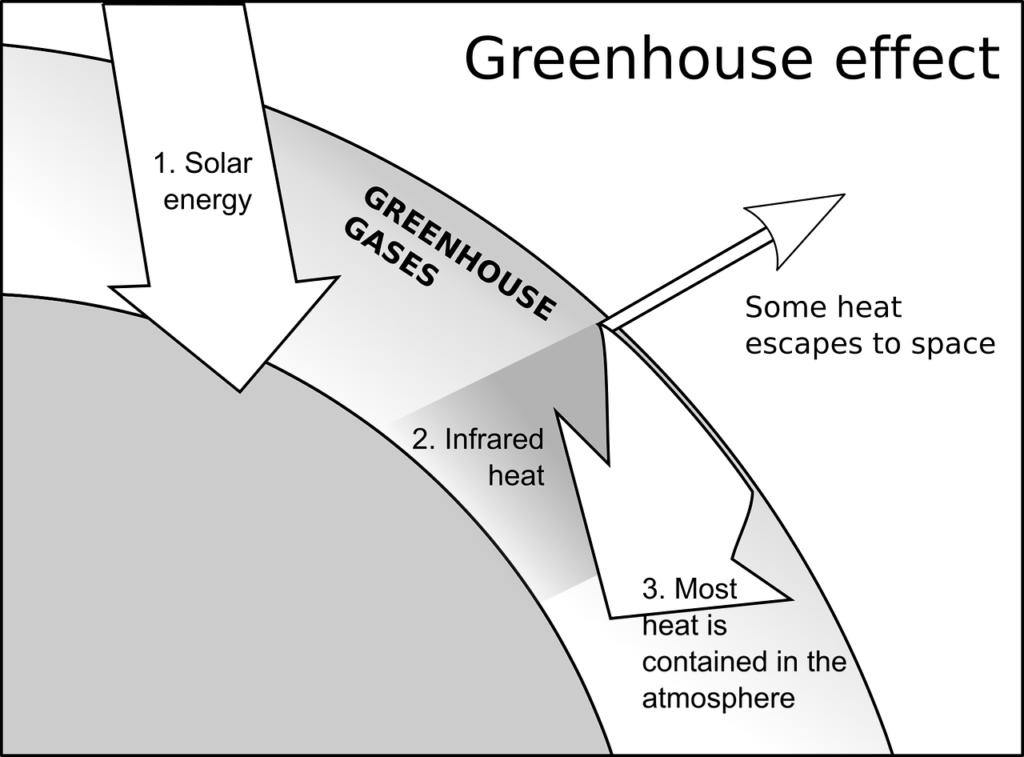
The Earth constantly absorbs energy from the Sun. In natural conditions, some of this incoming sunlight is bounced back into space by clouds, snow, and ice, while the rest heats the planet’s surface. The Earth then sends that energy outward again as infrared radiation.
Specific gases in the atmosphere—such as carbon dioxide (CO₂), methane (CH₄), and nitrous oxide (N₂O)—take in part of the infrared radiation leaving Earth and then radiate it back, holding warmth in the lower air. This natural greenhouse effect maintains an average surface temperature close to 15°C rather than roughly −18°C, enabling life.
The problem is not the greenhouse effect itself—it is its intensification.
Since the Industrial Revolution, people have consumed enormous amounts of coal, oil, and natural gas, while cutting down forests and scaling up industrial output. Together, these actions have sharply raised greenhouse gas levels, intensifying the greenhouse effect and altering Earth’s energy equilibrium. As a result, more heat is retained within the planet’s system than is released into space, driving a sustained increase in temperatures across the air and the oceans.
This warming is worldwide, yet its effects are unevenly felt.
Also Read: How to Travel Sustainably and Reduce Carbon Footprint
Why Land Warms Faster Than Oceans
One of the simplest yet most important reasons Europe is warming rapidly is that it is predominantly a landmass.
Water possesses a high specific heat capacity. It can take in vast quantities of energy while its temperature rises only modestly, then spreads that warmth via ocean currents and vertical mixing. Evaporation at the sea surface also draws off heat, naturally cooling marine habitats.
Land behaves very differently.
Soils, rocks, and urban surfaces warm much more quickly because they have lower heat capacity and limited evaporative cooling. Once solar energy reaches the ground, temperatures can rise rapidly, especially during prolonged periods of clear skies.
This explains why continents generally warm faster than oceans. Because Europe is mostly bordered by water yet dominated by land, it reacts faster to the intensified greenhouse effect than the global average, which accounts for extensive ocean-covered regions.
Arctic Amplification: Europe’s Northern Accelerator
Perhaps the single most distinctive factor behind Europe’s accelerated warming is its close relationship with the Arctic.
The Arctic is warming far faster than the global average because of a phenomenon known as Arctic amplification. Snow and sea ice have historically reflected a large proportion of incoming sunlight back into space. As worldwide temperatures climb, these bright, reflective surfaces thaw and disappear, revealing darker ocean and land that absorb far more solar heat.
This ice–albedo feedback triggers a self-reinforcing loop: as ice melts, it reveals darker areas, those areas absorb more warmth, and that extra warmth accelerates further melting.
Because northern Europe borders the rapidly changing Arctic, these changes influence atmospheric circulation across the continent. The result is stronger warming across Scandinavia, the Baltic region, the Alps, and parts of Central Europe.
Also good to read: Impact of Technology on Daily Life
The Main Reasons Europe Is Warming Faster
Changing Atmospheric Circulation
The weather is shaped not only by temperature but also by the movement of air masses.
For a long time, Europe’s climate has been shaped by the jet stream, a swift-flowing band of air several kilometres above Earth’s surface. This current guides storms and cooler air from the Atlantic across the continent.
As the Arctic warms more rapidly than lower latitudes, the temperature contrast that helps drive the jet stream may weaken. Many scientists argue this may help create a slower, more wavering jet stream, letting high-pressure systems persist over Europe for longer stretches of time. These so-called blocking patterns suppress cloud formation and rainfall while permitting continuous solar heating at the surface.
The precise impact of Arctic warming on jet stream dynamics is still being actively investigated, yet there is widespread consensus that enduring blocking high-pressure systems are strongly linked to Europe’s most intense and prolonged heatwaves.
Cleaner Air, Warmer Skies
An unexpected contributor to Europe’s warming is improved air quality.
For much of the twentieth century, industrial pollution emitted substantial amounts of sulfate aerosols and other tiny particulate matter into the atmosphere. These particles reflected a portion of incoming sunlight, creating a temporary cooling effect that partially masked greenhouse warming.
Over recent decades, European environmental regulations have substantially reduced aerosol pollution, improving air quality and public health. Although this marks a significant environmental win, it has also diminished the atmosphere’s reflective barrier, letting more sunlight and solar radiation reach Earth’s surface. The result is an increase in warming, even as greenhouse gas emissions remain the primary long-term driver.
Read More: Trending articles from Hustle Hustle
A Climate Defined by Feedback Loops
Europe’s rapid warming is best understood not as a single process but as a network of reinforcing feedbacks. Greenhouse gases increase average background temperatures; land areas warm more quickly than the seas; thawing snow and ice reveal darker ground; drier soils limit evaporative cooling; clearer air lets more sunlight reach the surface; and long-lasting high-pressure systems hold heat over the continent.
Each factor amplifies the others, producing a climate system that is increasingly prone to prolonged and intense heat.
The implications are clear and unavoidable: Europe isn’t just experiencing warmer summers—it is undergoing a profound shift in its climate system. If greenhouse gas emissions continue climbing on the current trajectory, the continent will face more regular extreme heat, sharper water scarcity, greater wildfire risk, and escalating pressure on public health, agriculture, infrastructure, and ecosystems throughout the twenty-first century.
